Why Asia Pacific’s Ecommerce Funnel Is Collapsing Into Social Commerce
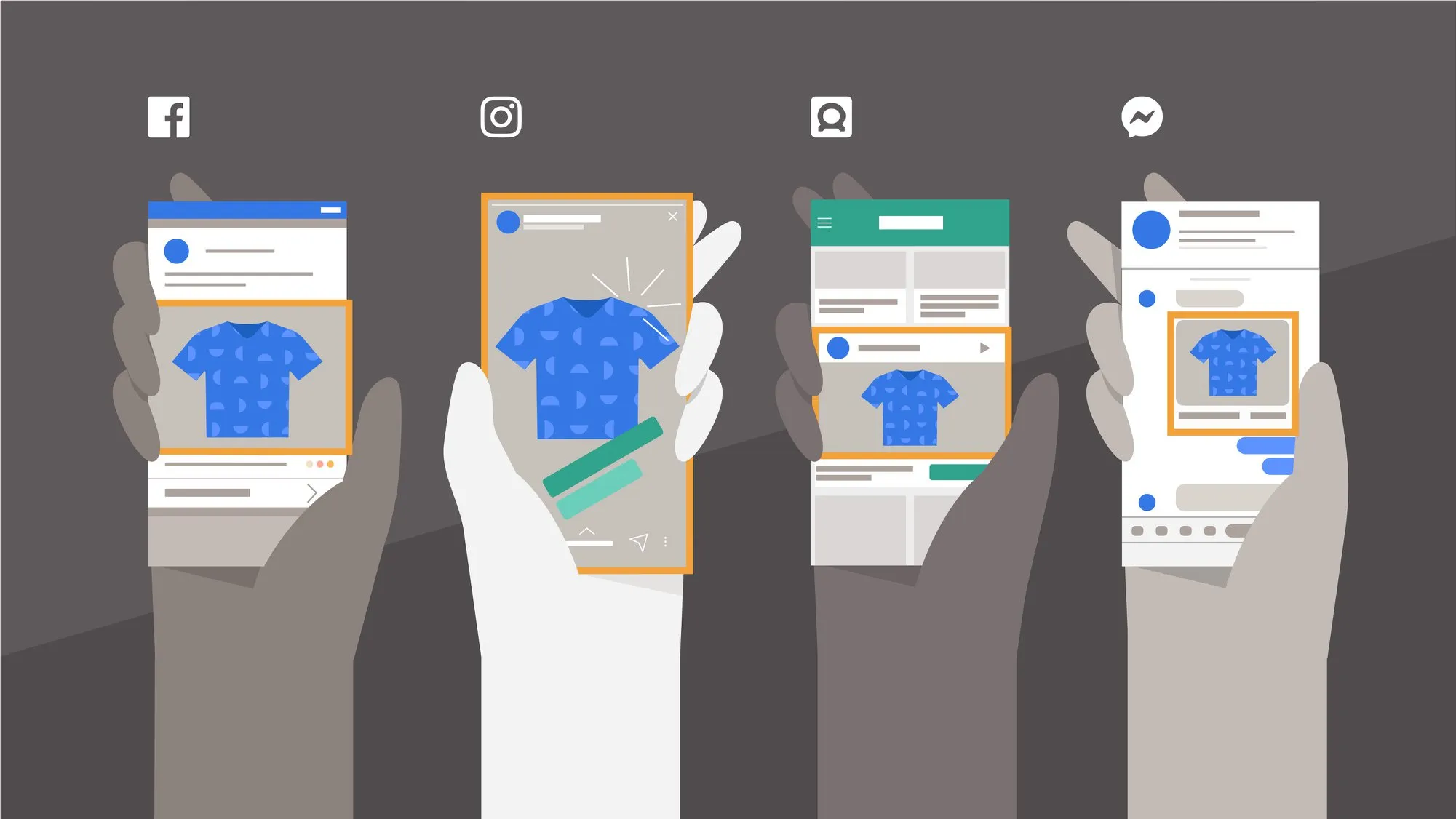
Asia Pacific is developing its own commerce behaviour
Creator marketing is moving closer to measurable commerce
The attribution problem has always been a challenge for creator marketing.
A person could be introduced to a product by a creator, but the actual purchase might take place days later via Google, through a retailer's app, on a marketplace or in a physical store.
It makes creator influence valuable yet hard to link directly to revenue. Companies are now trying to reduce that gap.
Meta states that over 10 million creators in the Asia Pacific region linked their Facebook accounts to an affiliate partner between July 2025 and July 2026; currently, its affiliate partnerships cover Shopee on both Facebook and Instagram, Lazada in Southeast Asia, and Flipkart and Myntra in India.
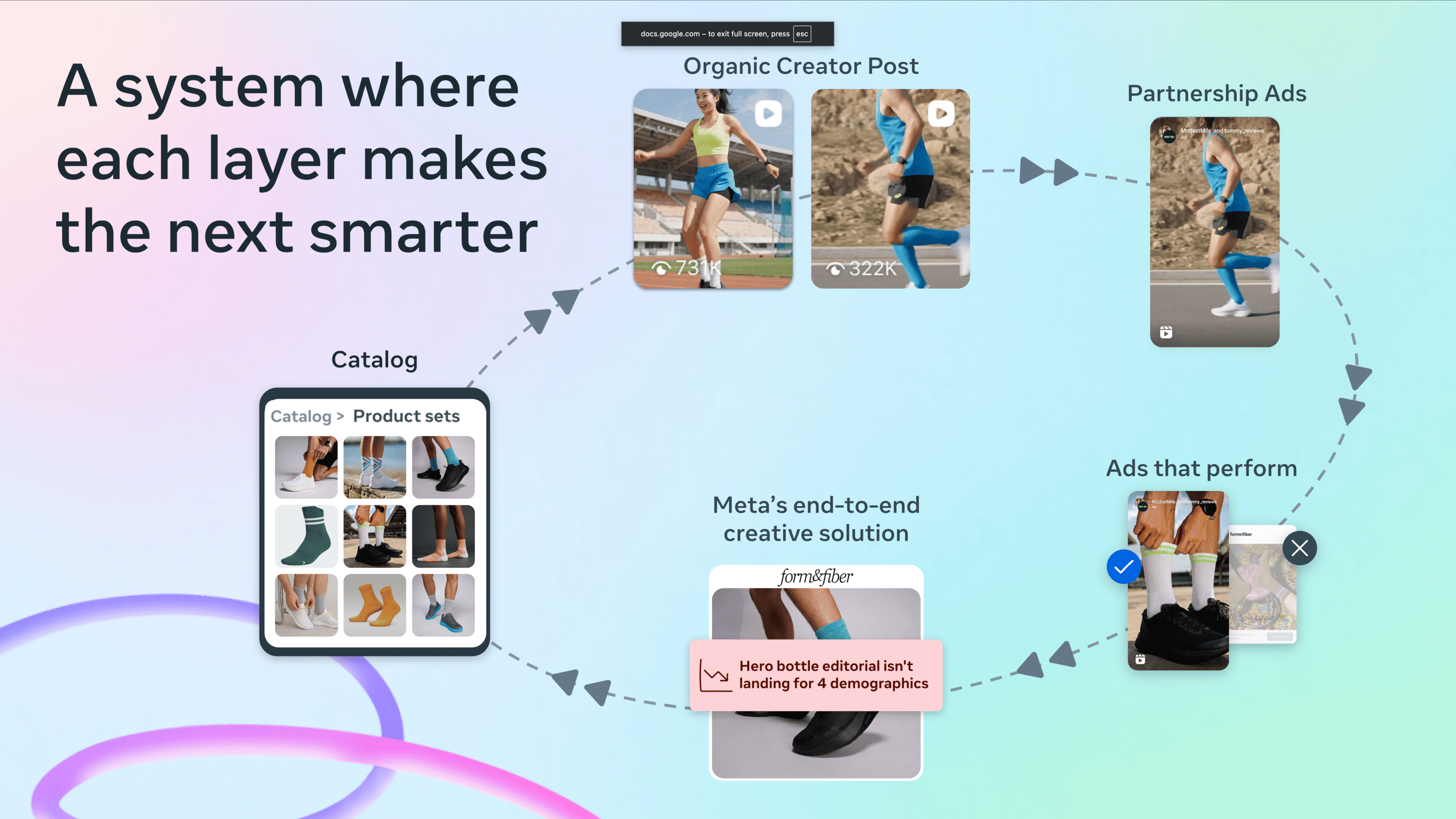
Creators have the option of adding products directly to their Reels and posts, together with a shopping icon and a 'commission eligible' label. For traders, this strategic change is significant.
Affiliate commerce does not remove the value of conventional influencer campaigns, but it does provide brands with another approach in which creator economics can become more closely linked with transactions.
This might affect the way e-commerce companies organise their creator programmes.
Rather than viewing each collaboration with a creator as a straightforward media purchase at a fixed fee, merchants might be able to put together a range of commercial arrangements involving brand-building creators, performance-focused affiliates, and creator content which can then be boosted using paid advertising.
By including partnership ads, Meta enables brands to have their media budget placed behind content created by creators, provided that the creator gives their permission.
The system that results begins to blur the line between creator marketing and performance advertising.
Livestreaming turns content into commerce inventory
Livestream shopping is yet another instance of the funnel collapsing.
Instead of just using a livestream to create awareness and then making advertisements based on it, Meta's Live Video Ads make the livestream itself the content that is advertised.
The company states that delivery can start about two minutes after a stream begins, and the feature will be available worldwide on Facebook and to eligible creators and businesses on Instagram. Meta does not impose any platform selling fees for the Live Video Ads feature.
This is especially relevant in a region where watching live streams is already a consumer habit.
For merchants, however, the main lesson is not just "to begin livestreaming". Livestream shopping is different from traditional product advertising. A product page is fairly static while a livestream is interactive.
While customers are looking at the products they may have questions regarding size, specifications, availability, colours, shipping or comparisons between products.
It therefore means that the commercial success of live content will depend on the situation that occurs right after interest has appeared.
It is here that messaging and conversational commerce become more and more important.
AI is moving from content generation into the buying journey
Generative AI made its way into ecommerce marketing mainly through the creation of content.
Write product descriptions faster. Generate advertising variations. Create images. Produce campaign concepts.
Although those applications are still important, the next phase seems to be more operational.
The company states that nine million small businesses are now using at least one of its generative AI advertising creative tools, and adoption of its image-generation tools has more than doubled during the quarter covered by the August 2026 business update.
What is more interesting for ecommerce operations is the extension of AI into customer conversations.
The Meta Business Agent is designed to answer customers' questions, carry out follow-ups and take orders via messaging, ensuring that it does so in keeping with the brand's tone.
Meta states that its platform can be integrated with systems such as Shopify, Zendesk, and Shopee and is currently being used by one million businesses worldwide through WhatsApp and Messenger, with plans to expand to Instagram.
That shows a different stage in the adoption of AI in e-commerce. AI is not any longer limited to assisting marketers in producing an advertisement before a campaign launches. It is now starting to take part following the advertisement having performed its function.
Consider the resulting customer journey:
Discovery → creator content → product interest → message → question → response → order
At each stage a different tool, campaign or team was required. There is a growing desire among platforms to establish connections with them. The chance for merchants is to work out where automation can remove friction without harming trust.
A customer asking whether a product is available in a particular size probably does not care whether a human or an AI retrieves the information, provided the answer is fast and accurate.
A complicated complaint, or sensitive customer service case, is different.
The challenge, therefore, becomes less about deploying AI everywhere and more about identifying the parts of the customer journey where speed, consistency, and availability genuinely improve conversion or service.
The ecommerce funnel is becoming a network
The idea of using a funnel approach supposes a progression that is fairly predictable.
Awareness comes first. Consideration comes next. Conversion happens later.
Modern social commerce is a lot more complicated.
A shopper could come across a product via a creator, read the comments, watch a live stream from the brand, see another creator giving a review of the same product, send the merchant a message if they had a question and then buy the item through the marketplace.
A different shopper could finish nearly the whole journey in a lot less time.
No movement takes place through a perfectly linear funnel. Merchants might therefore do better in considering social commerce to be a network of connected conversion surfaces.
Creators create discovery. Advertising expands distribution. Affiliate tools link recommendations with transactions. Livestreaming creates interactive consideration. Messaging reduces uncertainty. AI potentially accelerates responses. Marketplaces or stores provide full fulfilment.
It doesn't have to be the case that you gain a competitive advantage by being dominant on every surface. It results from decreasing the friction between them.
More automation makes trust more valuable, not less
This model shows a clear tension.
The simpler it is to produce advertisements, to publish commercial content and to automate conversations with customers, the simpler it also becomes for bad actors to operate on a large scale.
Trust thus becomes a component of the commerce infrastructure.
Meta stated that it had removed over 159 million scam advertisements during the past year and had shut down 10.9 million accounts which were linked to criminal scam centres on Facebook and Instagram.
The company also states that over 99 per cent of the content that appears next to advertisements on Facebook, Instagram and Threads has been independently judged as brand-safe by external partners.
The figures are those reported by Meta and should therefore be understood in that light, although they do point to a wider ecommerce issue.
As shopping becomes part of social activities, consumers must have confidence in both the seller and the setting in which the transaction begins.
For genuine retailers, visible authenticity signals become more important, such as established brand accounts, clear disclosures by creators, accurate product information, consistent communication with customers, and reliable post-purchase experiences.
AI can make commerce faster.
It is trust that decides whether customers are willing to act on it.
What should merchants take from Meta's strategy?
There is a commercial reason for Meta to convince businesses that Facebook, Instagram, WhatsApp and its advertising services should take up a bigger share of their customers' experience.
They should therefore distinguish between Meta's position regarding its platform and the broader behavioural signals in the data.
The important takeaway is that it is not necessary for every retailer to adopt all of Meta's products.
It seems that the three changes are coming together.
Social discovery is especially important in the Asia Pacific region, since the gap between social product discovery there and the global figure makes it hard for consumer brands to regard social platforms merely as awareness channels.
Second, creator commerce is becoming more transactional as affiliate integrations, shoppable content, and partnership advertising provide more ways to link a creator's influence to commercial results.
Third, AI is going deeper into ecommerce operations. Although content generation was the initial area of involvement, conversational agents and increasingly automated advertising systems are now affecting how customers are acquired and served.
All of these developments indicate that e-commerce teams might need to rethink how their organisations are structured.
The management of social media, performance marketing, creator partnerships, marketplace operations, and customer service is usually carried out by separate teams, each with its own objectives.
Customers do not come across those organisational boundaries.
What they have is merely friction, or rather, the lack of it.
The next competitive advantage may be continuity
The most interesting aspect of Meta's most recent commerce initiative is thus not any single feature.
It is continuity.
A person will be able to find something in the content, get confirmation from the creator, come across an advertisement, ask a question, and then get closer to making the purchase without having to go through the buying process again.
That is where social commerce is going. For merchants, the chance is not just about adding more channels.
The purpose is to integrate with the products and services customers already use.
A company might still achieve impressions, clicks, and transactions if it continues to regard content, creators, advertising, messaging and e-commerce as separate activities.
But businesses that connect those experiences may have something more valuable: a shorter distance between curiosity and cart.
Source: Dash to Cart analysis based primarily on Meta's Asia Pacific Business Updates press alert dated 13 August 2026 and the Meta-commissioned Ipsos Holiday Shopping Study cited within it. Survey figures and platform adoption figures attributed to Meta should be read as company-provided or company-commissioned data rather than independent market estimates.